
When the RESTART Network launched in early 2023, efforts to conduct pandemic-recovery related research were underway across the country. But, these efforts were often siloed, making it difficult to identify clear evidence related to what worked (or didn’t) to improve pandemic recovery. As we discussed what could make the RESTART Network different, we dedicated ourselves to breaking down silos and ensuring that our research reached policymakers and practitioners. To support our efforts, we developed a scaffolded approach to identify “collaborating partners.” These collaborating partners ultimately became the organizations we invited to serve as advisory board partners.
Sharing Insights and Highlighting Experts
Our advisory board partners were selected for their expertise and insights from their professional associations that represented local and state educators and leaders. Over the past three years, they have shared insights and key feedback from the field that have informed and guided the activities of the Network.
When developing resources, we consulted with our advisory board and considered how this work would address the evolving needs of the communities they represent. We also found ways to amplify the successes our advisory board partners and their communities were achieving related to pandemic recovery.
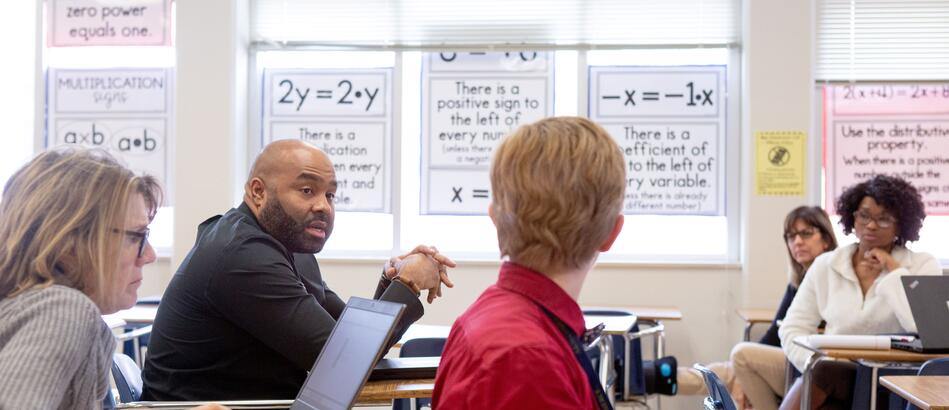
As we planned our events, we worked to ensure that a variety of perspectives and experiences were present. The advisory board partners often recommended school and district leaders to attend and participate in our convenings and events to ensure an audience that represented teachers and school leaders. At our in-person forum events, we had panelists and presenters who were state leaders, district and school leaders, educators, state teachers of the year, and school-based staff. Event attendees came from many contexts and environments: from big city school districts to rural school districts and from coast to coast.
Working Together
Bringing together such a variety of interested practitioners and policymakers at our meetings fostered cross pollination of ideas and enabled the sharing of ideas and findings as they emerged. The benefits of collaboration went in both directions – those people who participated in RESTART meetings shared feedback, both formally and informally, that they valued their participation in our events and that they were able to take the learnings and discussions back and apply them in their roles and contexts. At our recent culminating event for the Network, as we thanked our advisory board members for serving in these critically important roles, several expressed their mutual appreciation for the resources and strategies the network provided and for prioritizing the inclusion of their members’ perspectives.
Conversely, by broadening our participant groups, we also broadened the insights and perspectives reflected in our resources and better connected our work to the field by featuring experts and members suggested by our advisory board partners. Ultimately, collaborating closely with our advisory board partners helped us break down research-practitioner silos, leading to a stronger Network for all participants.
When developing Networks intended to foster the use of research evidence, it’s essential to include practitioner-connected advisory board members to ensure the work reflects the realities of those on the ground. Such boards bring in a variety of voices—across roles, communities, and lived experiences—that might otherwise be overlooked. Their insights not only enrich the research but also strengthen its relevance, equity, and impact.
Kylie Klein is a senior researcher at AIR, where she works with state, regional, and local agencies on research, evaluation, and technical assistance projects. Her research focuses on developing and sustaining research-practice partnerships, designing and conducting evaluations, and supporting the use of research evidence in state and local practice and policy. She serves as the National Network Lead for the RESTART Network, an IES funded pandemic recovery effort that supports four research-practice partnership teams.
Photo by Allison Shelley for EDUimages